




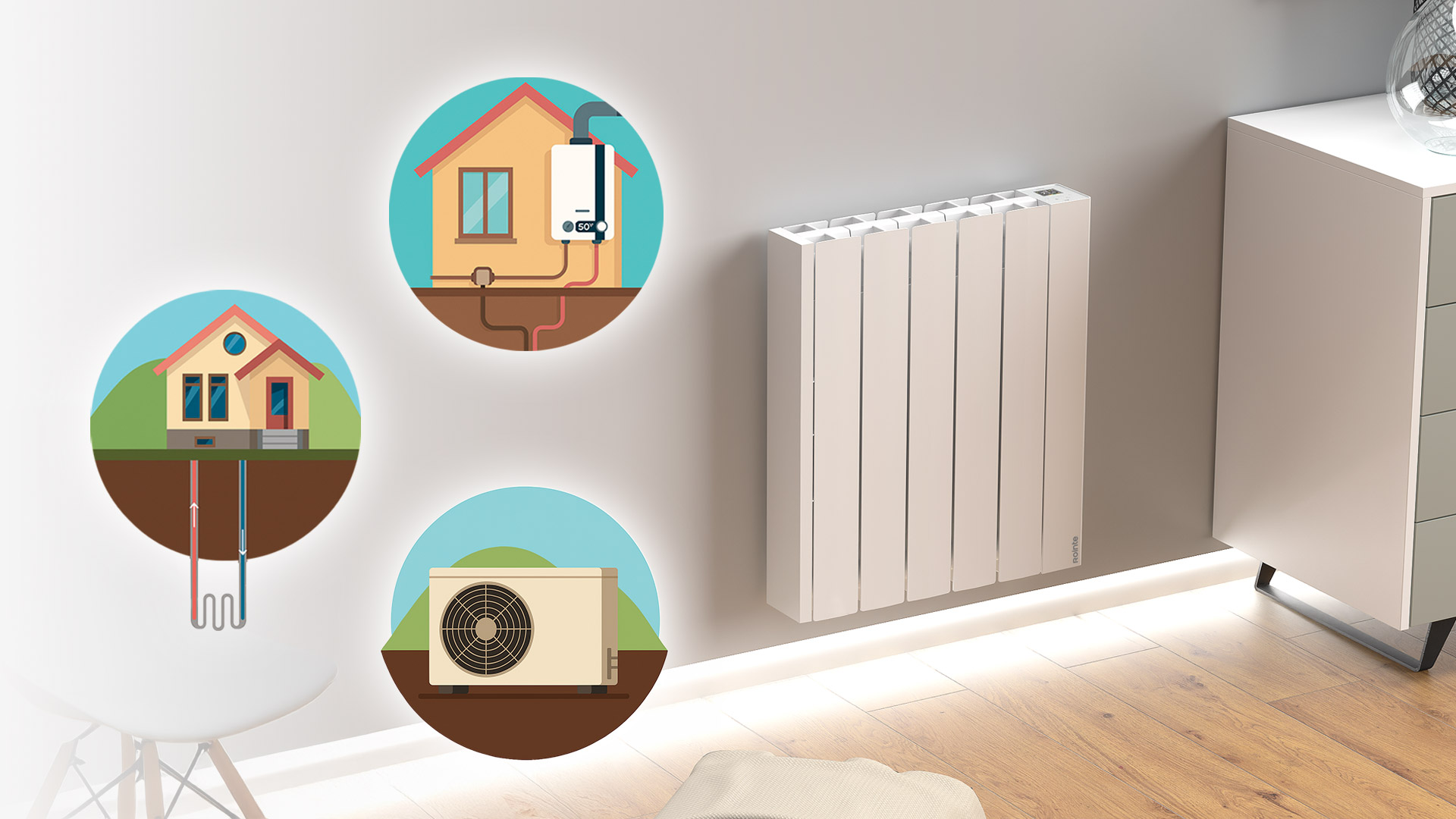
How to choose the best heating system in 2026?
At a time of energy transformation, choosing the right heating system for your home has become an increasingly complex decision. The variety of options available – from traditional systems such as gas, to newer technologies such as aerothermal energy, geothermal or state-of-the-art electric heating – can be overwhelming.
In addition, factors such as the increase in energy prices, new environmental regulations, the need to reduce emissions or the importance of comfort and efficiency in everyday life, make more and more people rethink their current system.
Which technology best suits your type of home? Which one requires less work? Which option consumes less in the long term? In this article, we look at the main heating alternatives available, their advantages, limitations, and what you should consider to make an informed and sustainable decision.
The evolution of electric heating
From the old inefficient heating elements to the current intelligent thermal emitters, technological evolution has completely transformed this system. Today, electric heating offers:
- Smart devices with WiFi connectivity
- Advanced energy control algorithms such as Fuzzy Logic
- High-performance materials such as our patented thermal fluid
- Full compatibility with renewable energies such as solar or wind
All this translates into more comfort, less consumption and a home prepared for the future.
Simple installation and no construction
One of the greatest benefits of electric heating is its quick installation, without the need for work or permits. Unlike gas, aerothermal or geothermal systems, electric radiators or underfloor heating can be easily installed in homes already built or in light renovations, which means less costs, less hassle and more flexibility.
High energy efficiency: up to 38% savings
Thanks to their design and internal technology, Rointe equipment can achieve up to 38% higher efficiency compared to other traditional electrical systems. Our Fuzzy Logic Energy Control technology adapts consumption based on the actual temperature of the environment, optimising energy use minute by minute.
In addition, our products integrate thermal fluid with high thermal inertia, which allows heat to be maintained even when the device is switched off, reducing consumption without compromising comfort.
Full control from your mobile phone
With the Rointe Connect app, you can control your heating from anywhere: turn equipment on or off, schedule by hours and days, create custom zones and see energy consumption in real time.
This level of control not only improves your experience, but helps you use less energy and pay less on your bill.
100% compatible with renewable energies
Electric heating has a key advantage over systems that use gas or fossil fuels: it is completely compatible with renewable energy sources.
If you already have (or are thinking of installing) solar panels, you can power your thermal emitters, accumulators or underfloor heating directly with clean energy, achieving a 100% emission-free air conditioning system.
Rointe’s unique technology: real efficiency with its own stamp
At Rointe we design and manufacture our products with our own patented technology. Here are some of our key innovations:
- Fuzzy Logic Energy Control: self-learning algorithm that reduces consumption by up to 62% compared to traditional systems.
- High inertia thermal fluid: allows a more uniform and long-lasting distribution of heat.
- Robust and elegant design: made of injected aluminum, with high-end finishes.
- Advanced safety systems: open window detection, child lock, overheating protection.
All this makes Rointe one of the leading brands in smart electric heating, with solutions for all types of homes and needs.
Do you want to take the step to cleaner, more efficient and modern heating? Discover our range of smart products and enhance the comfort of your home with technology designed to last.
Does gas heating still make sense in 2026?
Gas heating has been the most installed system in homes for decades. However, the current energy context has changed: European environmental regulations, the unstable price of gas and the need to reduce emissions mean that this system is lagging behind options such as electric heating.
Installation cost: high and with work
Installing a gas boiler is a significant cost. Not only because of the equipment itself, but also because of the work involved: installation of pipes, water radiators, smoke outlets and, in many cases, connection to the gas network.
In comparison, electric heating – especially with products such as Rointe thermal emitters – can be installed without work, without permits and without added cost for installation.
Mandatory maintenance and more breakdowns
Gas boilers require mandatory periodic checks, at least once a year, carried out by authorised personnel. This means a recurring expense and a dependence on third parties to guarantee the operation of the system.
In addition, they are more prone to mechanical, electronic or combustion breakdowns, which increases the risk of running out of heat in the middle of winter.
High repair cost
When a gas boiler fails, repair costs can easily exceed €300-500, especially if it involves electronics, valves, or heat exchangers. In the long term, this is a much higher expense than maintaining electrical systems, which require virtually no technical intervention.
A polluting system on the way to disappear
Natural gas, butane, and propane are fossil fuels that generate CO₂ emissions. This type of heating no longer meets the environmental objectives set by the EU.
In fact, countries such as the United Kingdom, Germany, the Netherlands and France have already announced progressive bans on the installation of gas boilers in new homes. European energy policy is aligned with the Net Zero 2050 goal, which means that this system will be obsolete in less than a decade.
Investing in gas heating today is investing in a technology with an expiration date.
Gas Price: Unstable and Uncontrolled
The price of gas is subject to geopolitical variables, international markets and import policies. In recent years, prices have shown high volatility, severely affecting consumers.
Meanwhile, electricity can be generated from renewable sources (such as solar or wind), allowing the user to have more control over their consumption and be less dependent on external markets.
Conclusion: gas is no longer a solution for the future
If you’re thinking about renewing your heating system or equipping your new home, gas shouldn’t be on the list anymore. Their installation is expensive, their maintenance is mandatory, their repairs are expensive and their environmental impact is incompatible with Europe’s energy future.
Energy-efficient electric heating is today the most viable alternative: clean, economical, easy to install and 100% compatible with renewable energy.
Make the switch today and start saving while contributing to a more efficient and sustainable home.
Aerothermal energy: efficient, but not for everyone
Aerothermal energy is a technology that extracts thermal energy from the outside air to generate heating, cooling or domestic hot water (DHW). It works by means of an air-to-water heat pump that transfers energy to a radiator or underfloor heating circuit.
It is an efficient and clean system that has gained popularity in recent years, especially in new construction. However, it is not as universal or as accessible as it may seem, especially when compared to modern electric heating systems.
High energy efficiency
One of the great arguments in favor of aerothermal energy is its high efficiency. It can achieve a COP (coefficient of performance) of between 3 and 4, which means that for every kWh consumed, it generates up to 4 kWh thermal. However, these data depend on several factors:
- Insulation of the home
- Outdoor climate (less efficient in extreme temperatures)
- Correct installation of the system
If any of these elements fail, the actual efficiency can be significantly reduced.
Very high installation cost
One of the main barriers to aerothermal energy is its high initial cost. Installing a complete heat pump (with outdoor unit, indoor unit, DHW tanks and underfloor heating or low-temperature radiators) can easily exceed €9,000 – €14,000 in a single-family home.
In addition, it requires significant work and, in most cases, prior planning in the construction or renovation of the home. It is not a solution for those who are looking for something fast, without work or affordable.
What if you live in an apartment? Aerothermal energy is not an option
This system needs a large outdoor unit , which needs to be placed on a façade, patio or terrace. If you live in an apartment without its own outdoor space, installing aerothermal energy will be, in practice, impossible or very complex.
In addition, outdoor units generate a certain level of noise and require ventilation, which adds more technical requirements and can cause conflicts in neighbourhood communities.
More complex installation and maintenance
Unlike electric heating, aerothermal requires specialized professional installation, commissioning, calibration and periodic maintenance. It is also more prone to complex breakdowns, and repairs can involve high costs.
Is aerothermal energy a good investment?
In a well-insulated single-family home, newly built and with enough space, aerothermal energy can be an efficient option. But for most existing homes, especially flats in buildings, it is not viable without a large investment and considerable work.
On the other hand, energy-efficient electric heating offers many of the advantages of aerothermal energy (efficiency, sustainability, digital control), but without the need for work, without noise, without an outdoor unit and at a much lower cost.
Do you have doubts about which option is best for your home? Check out our catalogue of electrical solutions and find a system that is 100% efficient, adaptable and easy to install.
Geothermal energy: an efficient but inaccessible technology
Geothermal energy is a technology that takes advantage of the constant temperature of the subsoil to generate thermal energy. Through a system of buried probes and a heat pump, heating, cooling and domestic hot water (DHW) can be obtained with high energy efficiency.
On paper, it is one of the most efficient and sustainable systems in existence. But in practice, geothermal is not viable for most households, especially when compared to electric heating.
How does geothermal energy work?
This system requires drilling into the ground to install geothermal probes that capture energy from the subsoil. That energy is transferred via a heat pump to a heating circuit, usually by underfloor heating or low-temperature radiators.
It is a clean and quiet technology, but with a great barrier to entry: its cost and complexity of installation.
Very high installation cost
The geothermal installation is one of the most expensive on the market. It requires land feasibility studies, permits, specialized machinery for vertical drilling, and high-cost technical equipment.
A complete installation can cost between €15,000 and €25,000 or even more, depending on the land and the surface area of the home.
In comparison, an installation of Rointe thermal emitters or electric underfloor heating can cost between €1,500 and €4,000, without the need for major work.
Major work and long times
The geothermal installation involves a complex and time-consuming work. It requires access to heavy machinery, drilling space, pipe installation, hydraulic systems and technical units.
This limits its implementation to single-family homes with land, excluding flats or terraced houses in urban areas.
Maintenance and possible breakdowns
Although considered a durable technology, geothermal systems require professional periodic maintenance, heat pump overhaul, hydraulic circuit cleaning, and pressure control.
In addition, if a breakdown occurs in the buried collection system, repairs can be extremely costly and difficult to execute.
Does geothermal really compensate?
From a technical point of view, geothermal energy offers exceptional performance. But from a practical and economic point of view, it is not a viable option for most Spanish households.
It requires a very high initial investment, a complex work and does not adapt to buildings, flats or dwellings in urban areas. In addition, its amortization can take more than 15 years, which does not make it an accessible alternative for the average consumer.
In contrast, electric heating is:
- More affordable
- Easy to install without works or permits
- 100% solar compatible
- Adaptable to any type of home
Do you need an efficient but hassle-free solution? Explore our range of Smart Thermal Emitters and Electric Underfloor Heating and bet on clean, connected and future-ready heating.
Comparison of heating systems: which one is best for your home?
Now that you know the different heating systems in detail, it’s time to compare their main features. This table summarises the key factors that you should take into account before making a decision: installation, consumption, sustainability, investment and viability according to the type of home.
| System | Installation Cost | Energy consumption | Maintenance | Does it require work? | Valid for flats? | Compatible with renewables | Initial investment | Estimated amortization |
|---|---|---|---|---|---|---|---|---|
| Electric heating | Low | Low - medium | No Required | No | Yes ✅ | Yes ✅ (100%) | From 1.000 € | 3-5 years |
| Gas heating | Medium - High | Medium - High | Mandatory (annual) | Yes | Yes (if already installed) | No ❌ | 4,000 – 6,000 € | 8-10 years |
| Aerothermal | Very high | Low | Moderate | Yes | No ❌ (requires outdoor unit) | Yes ✅ | 9.000 – 14.000 € | 10-15 years |
| Geothermal | Very high | Very low | Moderate - High | Major work | No ❌ | Yes ✅ | 15.000 – 25.000 € | 15-20 years |
As you can see, electric heating is the only option that combines:
- Simple installation and no construction
- Low maintenance
- High energy efficiency with digital control
- Full compatibility with renewable energies
- Affordable price and quick payback
In addition, it adapts perfectly to flats, houses, offices or second homes, without the need for renovations or depending on third parties for maintenance or revisions.
Do you want to start saving from this winter? Check out our catalogue of Smart Electric Radiators, WiFi Electric Towel Dryers and Underfloor Heating, and make the leap to modern, connected and sustainable heating.


